
- Strategic Structuring
- Risk Mitigation
Capital Markets
- Digital Engagement
- Market Visibility
Public Perception
- Shareholders Services
- EDGAR Filings


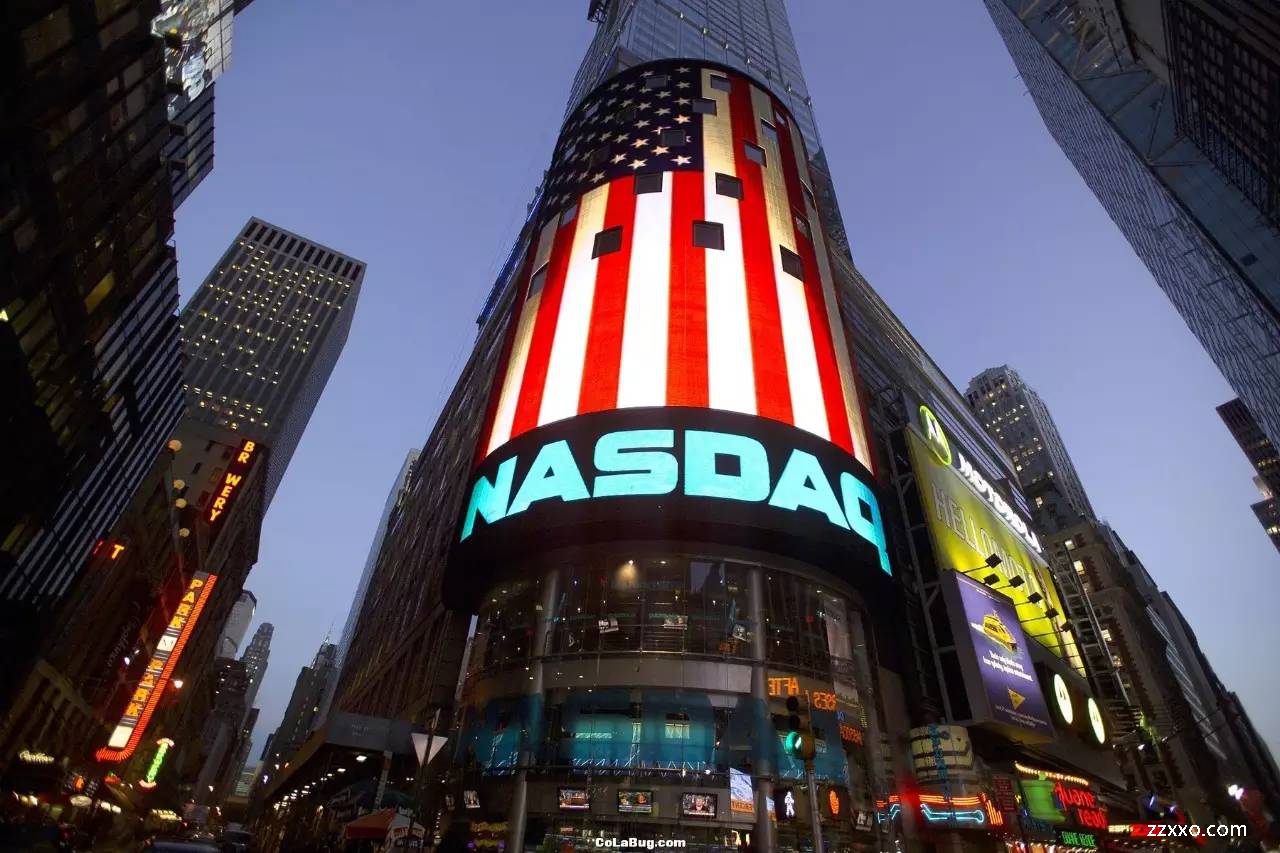
Over the past twelve months, Nasdaq and the SEC have collectively produced one of the more consequential stretches of exchange-level rulemaking in recent memory. Roughly 70 Nasdaq rule filings were publicly noticed between April 2025 and April 2026. Most were routine operational updates: fee schedule revisions, data-feed reconfigurations, and connectivity pricing changes. But beneath that volume, a smaller set of structural changes is reshaping how securities list, trade, and maintain their exchange status.
This article focuses on those structural changes. It draws on SEC-approved orders, Nasdaq rule filings, and SEC press releases to explain what happened, why it matters, and what listed companies and market participants should take away.
Perhaps the most consequential regulatory shift of the period was the SEC's September 2025 approval of generic listing standards for commodity-based trust shares. Before this change, each new spot-crypto or commodity ETP required its own Section 19(b) rule filing and SEC approval before it could list. That process was slow and case-by-case. The new generic framework allows qualifying products to list on Nasdaq without a fresh exchange rule filing each time, as long as they meet standardized criteria.
Nasdaq's filing (SR-NASDAQ-2025-056) proposed the new Rule 5711(d) generic standards in late July 2025. The SEC approved it on September 17, 2025. Nasdaq, Cboe BZX, and NYSE all filed comparable generic-standard rules around the same time, signaling a coordinated regulatory shift toward a more standardized product pipeline.
Alongside this, the SEC separately approved in-kind creations and redemptions for crypto ETPs in July 2025. A related Nasdaq filing (SR-NASDAQ-2025-038) extended that mechanics to the iShares Ethereum Trust, allowing it to operate more like a conventional commodity ETP. A separate filing attempted to permit staking of ether for the same product, but that was withdrawn in September 2025.
The practical effect of these changes is that the pipeline for new crypto and commodity ETPs is now faster and more standardized. Fewer filings will be needed for each new product. The SEC and CFTC reinforced this direction with a joint staff statement in September 2025 on spot crypto trading, and the SEC issued further guidance in March 2026 clarifying the application of federal securities laws to crypto assets.
The new generic listing framework means qualifying spot-crypto and commodity trust products can list without a separate SEC rule-approval process each time. That is a meaningful structural change for the ETP market.
Sources: SR-NASDAQ-2025-056 (SEC Approval Sept. 17, 2025) | SR-NASDAQ-2025-038 (iShares ETH in-kind) | SEC/CFTC Joint Statement Sept. 2, 2025 | SEC Crypto Guidance Mar. 17, 2026
In September 2025, Nasdaq filed SR-NASDAQ-2025-072, proposing to amend its rules to permit trading of securities in tokenized form. The SEC approved this in March 2026. This is a meaningful boundary-crossing: Nasdaq moved from simply listing crypto-linked exchange-traded products to creating a rulebook infrastructure for tokenized securities themselves.
Tokenization refers to representing ownership of a conventional financial asset on a blockchain or distributed ledger. The Nasdaq rule change establishes the exchange-level mechanics for how such securities can be listed and traded, though broader implementation depends on settlement infrastructure and regulatory clarity at other levels of the financial system.
The approval coincided with the broader SEC crypto-law interpretation published in March 2026, suggesting a coordinated policy posture from regulators toward accommodating blockchain-based market structure within existing securities law frameworks.
Sources: SR-NASDAQ-2025-072 (Approved Mar. 18, 2026)
While the crypto and ETP side of the docket was largely about expanding access, the listing standards side moved in the opposite direction. Several overlapping rules filed in 2025 and 2026 collectively raised the bar for who can list and who can stay listed on Nasdaq.
SR-NASDAQ-2026-033, filed April 15, 2026 and effective immediately (operative within 30 days), materially raises the initial listing thresholds for SPACs. The key changes are:
• Nasdaq Global Market SPACs must now have a minimum market value of listed securities (MVLS) of $100 million, up from $75 million.
• Nasdaq Capital Market SPACs must meet a new standard requiring $75 million MVLS, $20 million market value of unrestricted publicly held shares, at least four market makers, and 400 public shareholders.
These are the most significant changes to SPAC listing economics since Nasdaq's 2021 fee amendments. They align Nasdaq's SPAC standards more closely with NYSE and NYSE American requirements. Sponsors and underwriters working on Nasdaq-listed vehicles will need to account for these thresholds in structuring IPO sizes.
SR-NASDAQ-2025-066, approved in 2025, raised the gatekeeping standards for post-business-combination listings. Following a de-SPAC, the combined company must meet a minimum market value of unrestricted publicly held shares of at least $25 million. Direct listings on the Nasdaq Capital Market in connection with a de-SPAC transaction are no longer permitted. Companies transferring from OTC markets or other exchanges must have a minimum MVUPHS of $25 million and have traded on the prior market for at least one year.
SR-NASDAQ-2025-065 tightened the exchange's treatment of deeply distressed issuers by modifying the minimum-bid-price rule to accelerate compliance obligations when a security's closing bid falls and stays below $0.10 for ten consecutive trading days. This is a direct mechanism for pushing marginal issuers out of the listing ecosystem faster.
SR-NASDAQ-2025-069 proposed additional initial listing criteria for companies primarily operating in China. As of this writing, the filing remains pending, with SEC proceedings continued into March 2026. This is a live policy question with meaningful implications for cross-border IPO candidates and their underwriters.
SR-NASDAQ-2026-009 proposes to adopt new IM-5101-4, which would give Nasdaq the authority to delist a security where the SEC has previously suspended trading under Section 12(k) and Nasdaq determines delisting is in the public interest. This is a narrow but targeted tool: it addresses situations where third-party manipulation is suspected but the company itself may not have engaged in direct misconduct. The proposal was filed in February 2026 and is currently pending SEC review, with the decision period extended to June 2026.
SR-NASDAQ-2025-068 proposed modifications to certain initial and continued listing requirements more broadly. That filing remains pending as of April 2026. SR-NASDAQ-2025-104 gives Nasdaq limited discretionary authority to deny initial listing to certain companies, effective on filing in December 2025.
Sources: SR-NASDAQ-2026-033 (SPAC thresholds) | SR-NASDAQ-2025-066 (de-SPAC) | SR-NASDAQ-2025-065 (sub-$0.10 bid) | SR-NASDAQ-2026-009 (IM-5101-4 delisting)
Nasdaq filed SR-NASDAQ-2025-109 on December 29, 2025, proposing to extend U.S. equities trading to 23 hours a day, five days a week. The SEC approved the proposal on an accelerated basis in April 2026.
Under the approved framework, Nasdaq's current three-session structure (pre-market, regular, post-market) will consolidate into a Day Session running from 4:00 AM to 8:00 PM ET, followed by a Night Session from 9:00 PM to 4:00 AM ET. The one-hour gap is a technical pause for system maintenance and corporate action processing.
The full implementation timeline is not immediate. DTCC's clearing arm is targeting mid-2026 for 24x5 clearing capabilities, and the Securities Information Processor infrastructure also needs to be operational overnight before consolidated market data flows during the Night Session. In practice, the first live 23-hour trading days are expected in late 2026.
The context matters: NYSE Arca received approval for a 22-hour session earlier in 2025, and 24X National Exchange was already approved to operate on a 23-hour basis. Nasdaq's approval brings the largest U.S. equity exchange into an emerging industry consensus around extended-hours trading architecture. For listed companies, this has implications for earnings release timing, corporate action scheduling, and how management thinks about real-time price formation outside of conventional market hours.
Sources: SR-NASDAQ-2025-109 (Approved Apr. 2026)
The SEC held roundtables on both Rule 611 (trade-through prohibitions) in late 2025 and on options market structure in March 2026. These signal active reconsideration of core NMS routing architecture. Separately, the SEC issued an exemptive order in October 2025 temporarily delaying Rule 610(d) compliance. Nasdaq followed with SR-NASDAQ-2026-007 in February 2026, rewriting its fee schedule to comply once the delay expired. This sequence is a clean example of how SEC timing relief directly produces exchange repricing.
The SEC issued two orders compressing CAT operating costs, in September 2025 and March 2026. Nasdaq responded with corresponding CAT-related fee and compliance filings. CAT cost governance now has both an exchange-fee dimension (how Nasdaq bills industry members) and a Commission cost-compression dimension (how the SEC controls the CAT budget). Both remain live and are not yet fully resolved.
The SEC adopted final rules under the HFIA in February 2026. Effective March 18, 2026, directors and officers of foreign private issuers listed on U.S. exchanges must file Section 16 reports electronically and in English. This is a direct compliance obligation for FPIs on Nasdaq, not just a market-structure policy development. Legal counsel and compliance teams at affected issuers should have already addressed this.
In January 2026 the SEC published a staff report on capital-raising dynamics, and in March 2026 it published updated data on IPO and offering activity. Both reports suggest a stronger IPO backdrop than in prior years. In April 2026, the SEC's Small Business Advisory Committee announced a session focused on encouraging more IPOs. Taken together, these actions frame the tighter SPAC and listing standards not as an anti-capital formation posture, but as an effort to raise quality thresholds while the overall IPO market recovers.
Sources: CAT Cost Reduction (Mar. 27, 2026) | HFIA Final Rules (Feb. 27, 2026) | Rule 611 NMS Roundtable | Options Market Structure Roundtable (Mar. 5, 2026) | SEC Capital Raising Report (Jan. 2026)
The cumulative tightening of listing standards is the most direct concern. Companies in the lower tiers of the market, or those with recent compliance issues, face a more interventionist exchange posture: faster action on sub-minimum-bid situations, greater scrutiny following de-SPAC transactions, and new discretionary delisting authority once an SEC trading suspension is in place. Boards and audit committees should revisit their maintenance compliance programs in light of these changes.
Extended trading hours also create new questions around information disclosure, corporate action timing, and earnings release windows. While implementation is still months away, companies with significant retail or international shareholder bases should begin thinking through how Night Session trading affects their investor relations approach.
The combination of SR-NASDAQ-2025-066 (de-SPAC standards), SR-NASDAQ-2026-033 (raised IPO thresholds), and the broader SEC posture on IPO quality creates a materially higher bar for Nasdaq SPAC listings than existed two years ago. On the Global Market, the minimum MVLS requirement for SPACs rises to $100 million. On the Capital Market, the new standard requires $75 million MVLS and $20 million in unrestricted publicly held shares. Structures that would have cleared the prior thresholds may not clear the new ones. Deal sizing and trust account mechanics will need to be revisited accordingly.
The approval of generic commodity trust listing standards is the most impactful single change for this sector. Product launch timelines will compress. The combination of in-kind creations and redemptions, the generic framework, and the SEC/CFTC joint guidance on spot crypto creates a more predictable and more permissive regulatory environment for digital asset ETPs than at any prior point. The pending proposals around tokenized securities (already approved by Nasdaq's rules) and additional digital asset ETPs suggest the pace of product formation will continue to accelerate in 2026 and beyond.
The regulatory picture is dual-directional: product formation got easier, but listing gatekeeping got harder. Companies and sponsors that read only one side of this story will be caught off guard by the other.
All primary sources referenced in this article are publicly available through the SEC's SRO rulemaking docket and newsroom:
• Nasdaq rule filings: listingcenter.nasdaq.com/rulebook/Nasdaq/rulefilings
• SEC SRO rulemaking docket: sec.gov/rules-regulations/self-regulatory-organization-rulemaking/national-securities-exchanges
• SEC newsroom: sec.gov/newsroom/press-releases
The following filings and releases are the primary sources for this article:
SEC Approval of Generic Commodity Trust Listing Standards (Sept. 17, 2025)
SEC Permits In-Kind Creations/Redemptions for Crypto ETPs (Jul. 29, 2025)
SR-NASDAQ-2026-033: SPAC Initial Listing Requirements (Apr. 22, 2026)
SR-NASDAQ-2025-109: 23-Hour Trading Approval (Apr. 2026)
SEC HFIA Final Rules (Feb. 27, 2026)
SEC CAT Cost Reduction Order (Mar. 27, 2026)
SR-NASDAQ-2026-009: IM-5101-4 Delisting Authority (Mar. 3, 2026)
SEC Crypto Asset Securities Law Clarification (Mar. 17, 2026)
SEC/CFTC Joint Statement on Spot Crypto (Sept. 2, 2025)
SEC Reg NMS Rule 610(d) Exemptive Order (Oct. 31, 2025)
This article is prepared for informational purposes only and does not constitute legal or investment advice. First Cover is not a law firm. Readers should consult legal counsel regarding specific regulatory obligations.
Disclaimer: This article is for informational and research purposes only and does not constitute any investment advice.
 A Hawkish Hold Backed by Sticky Inflation and Resilient Demand
 The AI IPO Race: When Private Valuations Meet Public Scrutiny