- Strategic Structuring
- Risk Mitigation
Capital Markets
- Digital Engagement
- Market Visibility
Public Perception
- Shareholders Services
- EDGAR Filings



Private AI investors have already placed their bets. OpenAI raised its latest round at an implied valuation of roughly $852 billion. Anthropic closed a $65 billion Series H in late May 2026 at $965 billion and filed a confidential S-1 with the SEC just days later. The real question is no longer whether private investors will fund frontier AI at extraordinary prices. They already have. The question is whether public investors will accept those same prices once they can see audited numbers, risk factors, and margin pressure in plain sight.
That is what makes the current AI IPO race genuinely consequential. It is not just about who files first. It is about who can explain the economics of artificial intelligence in a form that public markets can actually underwrite. That means clear revenue segmentation, believable gross margins, manageable compute costs, plain-English risk disclosure, and governance that public investors can live with. The companies that do that well will reopen the tech IPO market on their own terms. The ones that cannot will reveal just how far private valuations can drift from public-market standards.
Why Anthropic and OpenAI Are the Companies to Watch
Anthropic is currently the highest-confidence near-term IPO candidate. On June 1, 2026, the company confirmed it had submitted a confidential draft S-1 to the SEC. This is materially more concrete than rumor; a confidential filing gives Anthropic the option to go public after the SEC completes its review, with timing subject to market conditions. At a $965 billion post-money valuation and a reported revenue run-rate above $47 billion as of May 2026, Anthropic would immediately become the first direct public benchmark for frontier-AI revenue scale.
OpenAI remains the central name in the race but is slightly behind. The company's March 2026 financing round implied an $852 billion valuation, and Reuters reported that IPO groundwork was underway. No confidential filing has been announced. What makes OpenAI especially significant is its business complexity: enterprise software, consumer subscriptions, API access, and platform ambitions all sit alongside unusual governance arrangements and deep partner dependence on Microsoft. Its listing would be the most direct test of how public markets handle a frontier AI brand with enormous momentum but structural complications.
First-Mover Advantages Are Real
The first major AI lab to list will enjoy at least three structural advantages. First, it captures scarcity attention; there are still very few pure-play, high-scale AI public equities. Second, it sets the reference multiple that all subsequent AI IPOs will be judged against. Third, Nasdaq's 2026 fast-entry rule change allows very large new listings that meet size and eligibility criteria to qualify for Nasdaq-100 inclusion much faster than before. Index inclusion brings passive flows, analyst coverage, and liquidity that late entrants do not automatically receive.
The recent IPO record demonstrates why narrative leadership matters. Figma's July 2025 debut closed up 250% on its first day and briefly valued the company at roughly $68 billion, though shares have since retraced significantly. Cerebras opened 89% above its IPO price in May 2026. Astera Labs jumped more than 70% in its March 2024 debut. Reddit finished day one up 48%. When demand concentrates around a must-own story, early pricing power can be extraordinary. CoreWeave showed the other side: its March 2025 IPO priced below range, finished day one essentially flat, and later generated sharp swings as investors wrestled with a $31-35 billion 2026 capex plan.
Capital and Strategic Position Drive the Timeline
For frontier labs, the decision to go public is primarily about capital and strategic positioning, not founder liquidity. Training and serving models at scale requires chips, cloud capacity, memory, networking, power, and data-center construction. Anthropic's compute bottleneck, Mistral's $830 million debt raise to buy Nvidia chips for a Paris data-center build-out, and CoreWeave's massive capex plan all tell the same story: this is a capital-intensive industry even when the product looks like software from the outside. Public equity provides not just cash, but also acquisition currency and a more durable balance-sheet tool for procurement and strategic M&A.
That said, the IPO window is open but selective. PwC described Q1 2026 as the best opening quarter for U.S. IPO activity since 2021, with TMT issuance leading the pipeline. EY similarly noted that quality names are getting done. But public markets are not rubber-stamping private prices; they are rewarding businesses with clear economics and punishing weak stories.
Five Categories, Five Different Valuation Logics
The AI landscape is best organized into five distinct categories, each with a different valuation logic. Frontier AI labs build and sell models and model access; their economics are shaped by compute, talent, and strategic partnerships. AI application companies sell workflows, copilots, or vertical tools into enterprise or consumer use cases; their economics look more like software if their customers stay and expand. AI infrastructure and hardware companies sell chips, connectivity, cloud capacity, and data-center services; they can grow fast, but they are capital-hungry and exposed to concentration risk. AI services and enablement companies sell data, labeling, evaluation, or deployment support; they can be profitable earlier than frontier labs but often carry lower multiples unless they build a true platform. Robotics and automation companies combine hardware, software, and service delivery; public markets tend to value them more like industrial or defense names than pure software.
This split matters because public investors do not apply a single AI premium. Infrastructure names that sit in obvious choke points of the value chain, such as GPU supply, interconnect, and cloud capacity, currently attract the strongest market support because the demand thesis is concrete. Software companies get rewarded when AI is linked to a clear workflow and a recognizable customer problem. What is harder to sustain is the general AI label without visible margins, durable contracts, or a clear path to free cash flow.
Selected Pre-IPO AI Companies
|
Company |
AI Category |
Latest Valuation |
Revenue Signal |
IPO Status |
Key Public-Market Question |
|
OpenAI |
Frontier AI lab |
~$852B (Mar. 2026) |
Rapid growth; no audited figures public yet |
IPO groundwork reported; no public S-1 yet |
Can revenue scale outrun compute cost and governance complexity? |
|
Anthropic |
Frontier AI lab |
~$965B (May 2026) |
Run-rate revenue ~$47B (May 2026) |
Confidential S-1 filed Jun. 1, 2026 |
Are margins and compute needs compatible with a public valuation near private marks? |
|
Databricks |
AI data platform |
$134B (Dec. 2025) |
$4.8B+ revenue run-rate; 55%+ YoY growth |
No public filing; credible long-term candidate |
Does it trade like SaaS, data infra, or AI platform? |
|
Scale AI |
Data /enablement |
~$29B (Jun. 2025) |
Limited public revenue detail |
No filing; Meta bought 49% stake |
Can it stay a neutral supplier after the Meta deal? |
|
Perplexity |
AI application |
~$18-20B (2025) |
Limited public disclosure |
No public filing; speculative timeline |
Can AI search become a durable, monetizable business? |
|
Mistral AI |
Frontier AI lab (EU) |
€11.7B (2025) |
Raised $830M debt for compute build-out (Mar. 2026) |
Long-term ambition; near-term filing unlikely |
Can European 'sovereign AI' command U.S.-style multiples? |
|
Anduril |
AI/ defense/ autonomy |
$61B (May 2026) |
Large private capital; no immediate listing need |
No public filing |
Defense, software, or AI autonomy multiple? |
|
AlphaSense |
AI-enabled software |
$7.5B (Jun. 2026) |
ARR >$600M; management flagged IPO interest |
Considering IPO; no confirmed filing |
Can AI research software win a premium without frontier hype? |
Note: Valuations are private-round marks, not traded prices. xAI is excluded from this table because Reuters reported a SpaceX acquisition in February 2026; xAI exposure now flows through SpaceX rather than a standalone float.
Databricks and Scale AI: Different Stories, Different Timelines
Databricks stands apart from the frontier AI pack because it looks more like a mature software platform candidate than a speculative lab. The company reported revenue above a $4.8 billion run-rate in December 2025, growing more than 55% year over year, at a $134 billion valuation. The public-market question is whether investors value it like Snowflake-era data infrastructure, an AI platform, or a blend of the two.
Scale AI is a different case. Meta's acquisition of a 49% stake at a $29 billion valuation provided liquidity and validation, but it also raised questions about independence and whether rival labs and enterprises will view Scale as too closely aligned with one hyperscaler. The near-term IPO urgency appears reduced. Perplexity, meanwhile, has reached private valuations in the $18-20 billion range, but there is no confirmed filing or credible near-term float based on public evidence.
A Clear Hierarchy Is Emerging
Public markets have already started sorting AI businesses into distinct buckets, and the hierarchy is becoming clear. GPU suppliers, interconnect vendors, and AI cloud operators are easy to underwrite because the demand thesis is visible and the choke-point logic is obvious. Software businesses that use AI to improve an already-familiar workflow, such as design tools, cyber recovery, community data licensing, or diagnostics, can also work. What seems harder to sustain is the AI label alone without a clear explanation of where the cash profits eventually come from.
Selected Public AI Comparables
|
Company |
AI Category |
Market Cap (Jun. 3, 2026) |
IPO / Listing Date |
Key Public-Market Lesson |
|
Nvidia |
AI infrastructure (chips) |
~$5.26T |
Long public |
Picks-and-shovels with real earnings; the clearest AI credibility anchor |
|
Palantir |
AI-enabled software |
~$367B |
Long public |
Workflow embedding + government contracts command a premium even at high multiples |
|
Astera Labs |
AI interconnect |
~$65.5B |
Mar. 2024 (+70% debut) |
Scarcity in the infrastructure stack rewards early movers; 93% YoY revenue growth in Q1 2026 |
|
Cerebras |
AI chips |
~$107B fully diluted (debut) |
May 2026 (+89% debut) |
Demand concentration and chip scarcity = powerful first-day narrative |
|
CoreWeave |
GPU cloud |
~$58.9B |
Mar. 2025 (below range debut) |
Capex and debt scrutiny is real; $31-35B 2026 capex plan rattled investors |
|
|
AI data platform |
~$33.6B |
Mar. 2024 (+48% debut) |
AI data licensing is a credible second revenue leg when disclosed properly |
|
Figma |
AI-enabled SaaS |
~$14B |
Jul. 2025 (+250% debut close) |
Hot debut can reverse; market cap fell ~77% from IPO peak by June 2026 |
|
Rubrik |
AI-enabled cybersecurity |
~$15.7B |
Apr. 2024 (+21% debut) |
AI as product enhancer works when the core business is independently sound |
|
Tempus AI |
AI healthcare /diagnostics |
~$8.4B |
Jun. 2024 (+8% debut) |
AI in regulated verticals faces multi-layered scrutiny (privacy, reimbursement, data) |
Note: Market caps as of June 3, 2026. Figma's closing first-day gain was 250% (IPO price $33, close $115.50); the 158% figure sometimes cited refers to the opening trade pop, not the closing gain.
CoreWeave as the Template for AI Infrastructure Scrutiny
CoreWeave is the most instructive current test case for what frontier AI IPOs will face. Its S-1 disclosed that 77% of 2024 revenue came from its top two customers, with the largest representing 62% alone. The filing also described more than $14.5 billion in debt and equity financing, heavy chip procurement dependence on Nvidia, and a capex plan that later reached $31-35 billion for 2026. The stock initially disappointed, recovered strongly as investors embraced the AI infrastructure thesis, then swung again when capex and margin math came into focus. This is precisely the tension a frontier AI IPO would face at far larger scale.
The Robotics and Smaller-Cap Lesson
Robotics and automation names show an even stricter public standard. Symbotic, UiPath, Serve Robotics, and Mobileye are worth approximately $6.4 billion, $6.3 billion, $0.6 billion, and $8.9 billion respectively, which is a long way from the roughly $39 billion private valuation reported for Figure AI in late 2025. The pattern is consistent: public investors pay for automation when deployment economics are visible, but they are far more conservative about forward-looking autonomy optionality than late-stage private rounds tend to be.
Why AI IPOs Are Structurally Different
An AI IPO is not simply a tech IPO with a different label. The fundamental difference is that AI affects the revenue side, the cost side, the legal risk profile, and the governance structure of a business simultaneously. For traditional non-tech IPOs, AI is usually an operational tool that does not materially change the valuation thesis. For traditional tech IPOs, AI is typically a product enhancement or an upsell driver. For a frontier AI lab, AI is the business; the model is the product, the compute bill is the biggest cost, and the regulatory and IP exposure around AI outputs is direct, not peripheral.
How AI IPOs Compare to Traditional and Tech IPOs
|
IPO Type |
Investor Focus |
Valuation Method |
Key Risks |
What AI Changes |
|
Traditional (non-tech) IPO |
Profitability, cash flow, operating history, balance sheet |
Earnings, EBITDA, free cash flow, asset value |
Demand cycles, leverage, execution risk |
AI is typically an operational tool, not the valuation driver |
|
Traditional tech IPO |
ARR, growth rate, gross margin, retention, sales efficiency |
Revenue multiples; rule-of-40 tradeoffs |
Profitability timeline, competition, spending discipline |
AI often serves as product enhancement or upsell driver |
|
AI IPO |
Revenue quality, compute cost, capex, customer concentration, governance |
Hybrid: software + infrastructure + semiconductor + optionality |
Commoditization, cost inflation, regulation, partner dependence, margin volatility |
AI is simultaneously a revenue driver, cost driver, legal risk, and governance question |
What Public Markets Will Demand From a Frontier AI Filing
Based on current SEC guidance and recent filing patterns, public investors will likely focus on at least six dimensions in any frontier AI prospectus.
• Revenue segmentation: consumer subscriptions, enterprise contracts, API usage, and any platform or licensing income should be clearly separated.
• Cost transparency: compute, cloud, power, depreciation, and data-center costs must be disclosed in sufficient detail to model margin trajectory.
• Customer concentration: the CoreWeave model, where 62% of revenue came from one customer, will raise immediate questions about durability.
• Partner dependence: cloud commitments to Amazon, Microsoft, or Google, chip supply from Nvidia, and strategic investment relationships all need to be explained with arms-length rigor.
• Governance terms: dual-class structures, safety commitments, related-party arrangements, and founder control need public-company-grade disclosure.
• AI claim accuracy: the SEC has been explicit about AI washing; any prospectus that overstates AI capabilities or understates risks faces live enforcement risk.
What the SEC Is Already Signaling
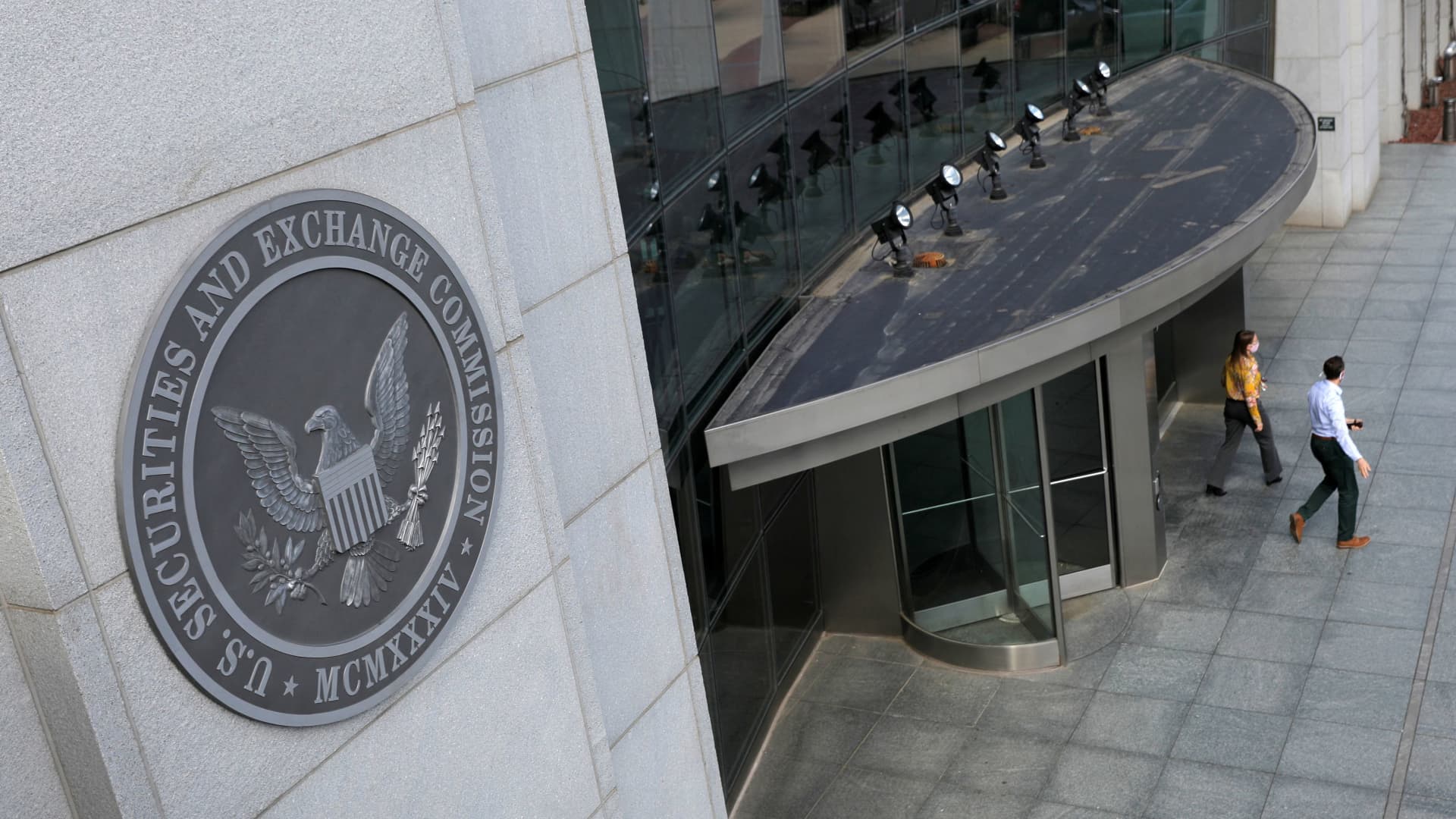
The SEC has not created a separate AI disclosure regime, but senior officials have been explicit: existing materiality-based rules already apply. In June 2024, Division of Corporation Finance Director Erik Gerding directed companies to define what they mean by AI, describe how it could affect operations and results, and provide tailored rather than boilerplate disclosure. The underlying standard is simple: if AI matters to the business, the company must say so concretely; if it does not matter, management should not imply otherwise.
On AI washing specifically, the SEC's March 2024 enforcement actions against Delphia and Global Predictions for false and misleading statements about AI use made the stakes concrete. For AI IPO candidates, the line between a persuasive growth story and a misleading one is now a live enforcement issue. The SEC Investor Advisory Committee has also pushed for more coherent, materiality-focused AI disclosure guidance, specifically covering the impact of AI on growth, competitive dynamics, adoption barriers, and regulatory developments.
What Recent Filings Already Show
The disclosure templates set by recent AI-adjacent IPOs are instructive for what frontier labs will be asked to replicate at a much larger scale.
CoreWeave's S-1 demonstrated AI infrastructure disclosure at its most concentrated: 77% revenue from two customers, $14.5 billion in financing, deep Nvidia supplier dependence, and a heavy capex forward commitment. Tempus AI's S-1 showed that generative AI tools create their own disclosure obligations, including copyright uncertainty for AI-generated outputs and cyber risks from AI-assisted code. Reddit's final prospectus set one of the clearest templates for AI data monetization disclosure, describing $203 million in aggregate data-license contract value and disclosing an FTC inquiry over user-generated content licensing. Figma's S-1/A addressed AI regulation directly, including the EU AI Act and state-level AI laws, alongside copyright risk in AI-generated content and founder control terms.
Together, these filings show that AI IPO disclosure is not a single item in a risk factor section. It is a package of commercial risk, cyber risk, data risk, IP risk, concentration risk, and governance risk, all of which regulators now expect to be addressed substantively.
Exchange Standards: No AI-Specific Rules, but a Higher Readiness Bar
Nasdaq and NYSE do not impose AI-specific listing standards. The formal requirements remain the standard ones: public float, share price, audit committee independence, governance, and shareholder approval thresholds. Nasdaq Rule 5605 requires a fully independent audit committee of at least three directors. NYSE listing standards focus on market value of publicly held shares, distribution, and governance in the usual manner.
In practice, though, AI companies face a higher readiness bar under the same rules. Concentrated customers, complex related-party relationships, founder control structures, rapid capital needs, and evolving regulation all increase the burden on audit committees, disclosure controls, and finance infrastructure. EY has noted consistently that AI and infrastructure companies need stronger internal controls and public-company processes built earlier than most. That is especially true when a company plans to use IPO proceeds to fund large infrastructure expansion while maintaining a high-growth narrative.
The Nasdaq fast-entry mechanism adds another strategic dimension. A large AI listing that meets the criteria could reach the Nasdaq-100 significantly faster than under the prior framework, which matters for passive index flows, liquidity, and market visibility. Exchange choice and free float planning are therefore strategic decisions for large AI IPO candidates, not administrative ones.
Bottom Line
The AI IPO race matters for a reason that goes beyond the companies themselves. The first frontier AI lab to go public will create the first sustained public benchmark for a category that has so far been priced entirely in private markets, by investors with strategic rather than purely financial motives. That benchmark will matter for every subsequent AI capital raise, every board conversation about a company's AI investment, and every analyst trying to value a business that says AI is core to its future.
What the market has already shown, through CoreWeave, Cerebras, Figma, Reddit, and others, is that public investors will pay for AI when they can see clearly where value is created, where cash costs accumulate, and what would make the business hard to replace. They will not automatically pay for the AI label alone. The companies that prove the economics clearly will reopen the IPO market on their own terms. The ones that cannot will provide the most expensive lesson in narrative-versus-fundamentals that public markets have seen in a generation.
Selected References
Anthropic. Confidential Draft S-1 Announcement. June 1, 2026. anthropic.com/news/confidential-draft-s1-sec
Reuters. 'Anthropic raises $65 billion, now valued at $965 billion.' May 28, 2026.
Reuters. 'AI giant Anthropic confidentially files for U.S. IPO.' June 1, 2026.
Reuters. 'OpenAI aiming for speedy IPO.' May 20, 2026.
Reuters. 'Cerebras opens 89% above IPO price on U.S. market debut.' May 14, 2026.
Reuters. 'Design software maker Figma shares surge on blowout market debut.' July 31, 2025.
Reuters. 'CoreWeave tops quarterly revenue estimates.' May 7, 2026.
Reuters. 'New Nasdaq rules include fast entry for new listings to benchmark index.' March 30, 2026.
Reuters. 'SpaceX acquires xAI at combined $1.25 trillion valuation.' February 2, 2026.
Reuters. 'Databricks surpasses $4.8B revenue run-rate, growing 55% year over year.' December 2025. databricks.com
Reuters. 'Meta finalizes investment in Scale AI, valuing startup at $29 billion.' June 2025.
CoreWeave S-1. Filed March 2025. SEC EDGAR: sec.gov/Archives/edgar/data/1769628/000119312525044231/d899798ds1.htm
Tempus AI S-1. Filed May 2024. SEC EDGAR.
Reddit Final Prospectus (424B4). Filed March 2024. SEC EDGAR.
Figma S-1/A. Filed July 2025. SEC EDGAR.
Astera Labs S-1. Filed 2024. SEC EDGAR.
Rubrik S-1. Filed April 2024. SEC EDGAR.
SEC. Gerding, E. Statement on the State of Disclosure Review. June 24, 2024. sec.gov/newsroom/speeches-statements/gerding-statement-state-disclosure-review-062424
SEC. Enforcement Actions Against Delphia and Global Predictions for AI Washing. March 2024. sec.gov/newsroom/press-releases/2024-36
SEC Investor Advisory Committee. Approved Recommendation on AI Disclosure. December 4, 2025.
Nasdaq Listing Rules, Rule 5600 Series. listingcenter.nasdaq.com/rulebook/nasdaq/rules/nasdaq-5600-series
EY. IPO Trends and Capital Markets Outlook. ey.com/en_gl/insights/ipo/trends
PwC. U.S. Capital Markets Watch, Q1 2026. pwc.com/us/en/services/consulting/deals/us-capital-markets-watch.html
This article is prepared by First Cover for informational purposes only and does not constitute investment advice or a solicitation to buy or sell any security. All valuations cited are private-round marks unless otherwise stated. Market caps as of June 3, 2026.
Disclaimer: This article is for informational and research purposes only and does not constitute any investment advice.
The AI IPO Race: When Private Valuations Meet Public Scrutiny